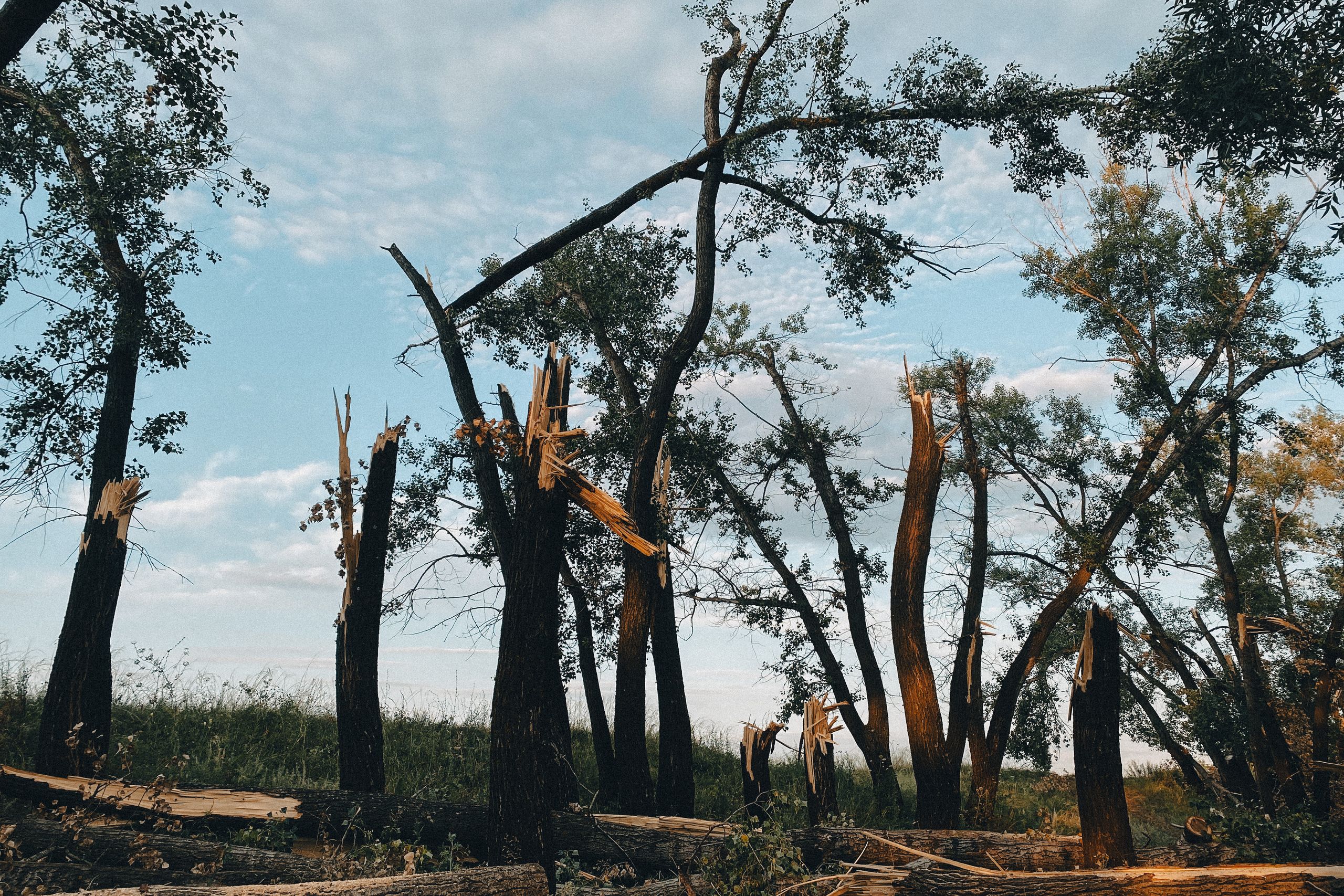
When the storm has passed, many forest owners are left with storm damaged forest in their stands. The sooner you act, the more of the timber value you save and the lower the risk of a spruce bark beetle outbreak the following season. After Gudrun and Per we know how quickly the situation can move from blowdown to insect outbreak if fallen timber is left in the forest.
In this guide we go through why storm damaged spruce must be removed quickly, how to prioritise safely, which notifications apply and how you plan the reforestation after the clean up.
Why must storm damaged spruce be removed quickly?
Fresh, blown down and broken spruce is the perfect breeding ground for the spruce bark beetle. A single unharvested blowdown can, during a warm spring, produce a large population that then attacks healthy, standing trees around it. That is why the Swedish Forestry Act limits how much fresh spruce timber may be left in the forest.
There is also an economic side. A batch of timber loses value quickly when it lies unbarked in the forest, since it is attacked by insects and blue stain fungi. The faster the timber reaches industry, the better the price you get for it.
How to assess the extent of the damage
After a storm it is easy for attention to land on the most visible damage near roads and houses, but the largest volumes are usually inside the stand. Use several perspectives to get a proper picture.
- Fully uprooted trees. Trees that have fallen with the root plate lifted. These are usually completely dead but the timber is still fully usable if it is removed quickly.
- Trees with broken tops. Standing trees with the top snapped off. Often weakened and a likely starting point for spruce bark beetle attacks.
- Leaning trees. Trees with root damage that are still upright. They can fall later at the next hard wind and become dangerous to work near.
- Edge damage. New stand edges facing clearings that have become exposed and blown over in groups.
How to act after the storm
- Put safety first. Never work alone in a blowdown, and do not enter the forest until the wind has died down. Fallen trees are under tension and can snap back violently when cut.
- Get an overview. Walk the property and map where the damage is, how large the volume is and which roads are passable. Take photos for your own documentation and for any insurance claim.
- Notify for larger damage. For larger volumes of storm damaged forest you must file a felling notification with the Swedish Forest Agency (Skogsstyrelsen). Check the current rules and thresholds before harvesting begins.
- Hire an experienced contractor. A blowdown is among the most dangerous work in the forest. A skilled contractor with the right machinery brings the timber out faster, more safely and with better quality than solo manual work.
- Prioritise the spruce. Fresh spruce is what attracts the spruce bark beetle. Pine and broadleaf timber is less urgent, but fresh spruce must be out of the forest before the spring swarming.
- Follow up during the summer. Even after clean up, you must inspect standing trees around the old blowdowns. That is where the first spruce bark beetle attacks usually appear.
Prevent future storm damage
Storms cannot be avoided, but you can reduce the risk of large damage through long term choices in your management.
- Avoid sudden edges. Stands exposed to wind by adjacent final felling are especially sensitive. Plan clearing edges so that the wind does not get a free run into the stand.
- Vary species and ages. Mixed stands with spruce, pine and broadleaves stand up to storms better than a pure, even aged spruce forest on the wrong soil. See our guide on the right plant choice for the site.
- Keep the stands vigorous. Through cleaning and thinning at the right time, the remaining trees develop better roots and become more storm firm. Read more about when to clean the forest.
- Right species on wet ground. Spruce on shallow or wet soils roots superficially and blows over more easily. There, pine or broadleaves are often a better fit.
After the clean up: reforest the area
Once the blowdown has been hauled out you are left with an area to become new forest. The same chain then applies as after a normal final felling: soil preparation, followed by planting, preferably with a more varied species mix. The whole process is described in our guide on replanting after felling step by step.
To protect the new plants against game and the pine weevil, plant treatment is often an obvious next step.
Frequently asked questions about storm damaged forest
Do I have to remove all storm damaged trees?
Fresh spruce should be taken out quickly, since it will otherwise become a breeding ground for the spruce bark beetle. Rules on how much fresh spruce may be left are set in the Swedish Forestry Act and may change, so check the current conditions with the Swedish Forest Agency.
How urgent is it really?
Fresh spruce timber must be out of the forest before the spring swarming in April or May, otherwise it risks becoming a launching pad for spruce bark beetle attacks during the summer. The faster the timber reaches industry, the better the price.
Can I handle the blowdown myself?
Chainsaw work in a blowdown is among the most dangerous jobs in the forest and demands substantial experience. For larger damage an experienced contractor is usually both safer, faster and more economical.
Need help after a storm?
Grimslövs Skogstjänst helps forest owners in southern Sweden with the whole chain after a storm, from clean up and haulage to soil preparation and replanting of affected areas. Request a free quote or contact us and we will make a plan for your forest.